


Ventilation plays a vital role in the safety and productivity of heavy industrial environments. Among the most effective tools for large-scale airflow management is the venturi air mover, a device powered by compressed air that creates powerful suction and directional airflow using the Venturi principle. In oil, gas, and mining sites where air quality can change rapidly, these air movers offer a level of performance and reliability that traditional fans struggle to match. Understanding why they are the preferred choice for these demanding sectors highlights their importance in modern industrial operations.
How the Venturi Principle Enhances Airflow
At the heart of a venturi air mover lies a simple yet powerful physics concept. When compressed air enters the device and passes through a narrowed section, it accelerates and reduces pressure, pulling surrounding air along with it. This creates a strong suction force that moves high volumes of air without relying on electric motors or complex mechanical components. This is a huge benefit for businesses that work in rural or dangerous areas. The venturi design ensures consistent airflow even in rough outdoor environments, making it ideal for displacing fumes, dust, smoke, and stale air quickly and efficiently.

Why Venturi Air Movers Are Safer in Hazardous Zones
Oil, gas, and mining operations often involve flammable gases, explosive dust, and confined spaces where electrical equipment can be risky. A venturi air mover offers a safe alternative because it does not generate sparks, heat, or electrical currents. Since it runs entirely on compressed air, the device is intrinsically safe for use in areas where ignition must be avoided at all costs. This makes it one of the most reliable solutions for ventilating tanks, pits, tunnels, pipelines, and underground chambers. Safety managers prefer this technology because it lowers the risk of accidents while still delivering powerful airflow.
Superior Ventilation for Confined and Deep Spaces
Industrial sites frequently include narrow shafts, long tunnels, and deep excavations where natural ventilation is limited. The lightweight and portable design of a venturi air mover allows teams to set it up quickly in areas with restricted access. Once connected to a compressed air source, it begins moving large volumes of air almost instantly, flushing out harmful vapours and supplying fresh air to workers below. Mining sites, in particular, benefit from the device’s ability to maintain steady airflow over long distances using ducting. This ensures that workers receive clean, breathable air regardless of depth or location.
Durability and Low Maintenance for Harsh Environments
Oil fields, offshore rigs, and mining environments expose equipment to dust, moisture, temperature fluctuations, and corrosive elements. A venturi air mover is built to withstand these conditions with minimal maintenance. With no electric motors, bearings, or moving parts, there is little that can break or wear out. The rugged construction allows it to operate continuously without overheating or failing under pressure. This durability translates into lower long-term costs, fewer interruptions, and reliable performance in sites where time is money and downtime can be costly.
Versatility Across Multiple Industrial Applications
Another advantage of venturi technology is its broad application range. In oil and gas operations, it is commonly used for tank ventilation, gas dispersal, and vapour control during maintenance or shutdowns. In mining, it assists with dust removal, smoke extraction, and air supply for drilling or blasting areas. The same unit can handle ventilation, extraction, and cooling tasks depending on how it is positioned and ducted. This flexibility makes the venturi air mover a practical and efficient investment for industrial teams that require dependable multipurpose ventilation equipment.
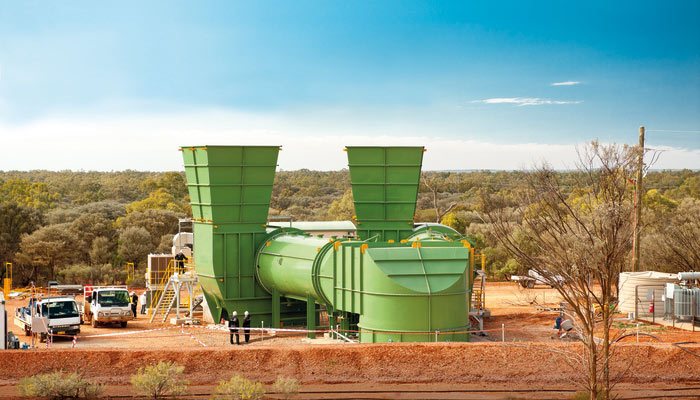
Why These Air Movers Remain the Preferred Choice
In industries where safety, efficiency, and reliability matter, a venturi air mover stands out as a trusted tool. Its spark-free operation, high-volume airflow, and rugged construction make it ideal for demanding oil, gas, and mining environments. By harnessing the power of compressed air and the Venturi principle, these devices deliver a level of performance that helps protect workers, improve air quality, and keep operations running smoothly.
